Home Setup After Hip Replacement
Affiliate disclosure: This article contains affiliate links. If you buy through a link on this page, we may earn a small commission at no extra cost to you. Our recommendations are based on the features that matter for everyday use, and a commission never changes which products we include. Affiliate links in this article are marked `rel=”sponsored nofollow”` and use the placeholder [AMAZON ASSOCIATES ID] until live affiliate links are confirmed
.
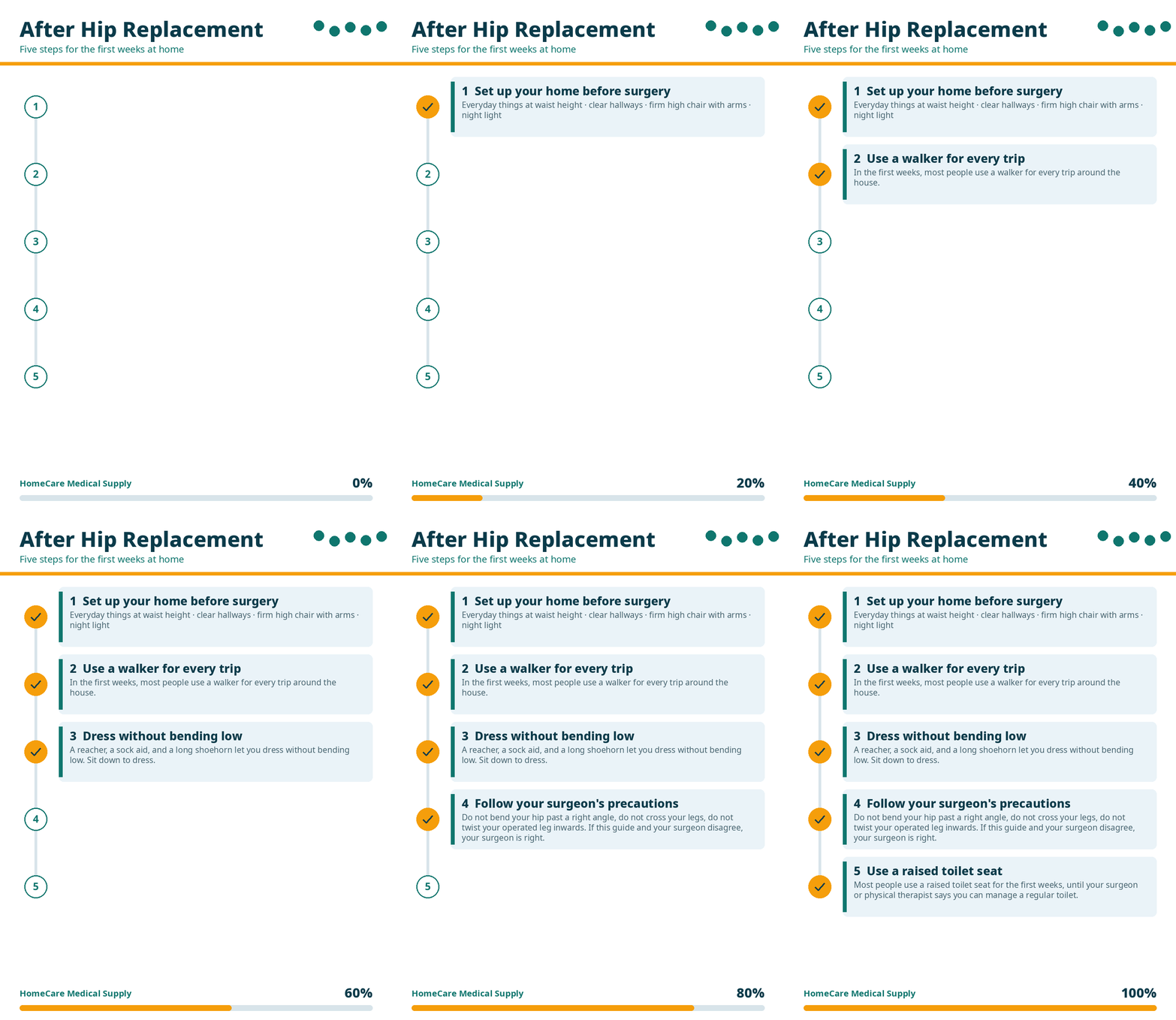
Coming home after a hip replacement is a strange mix of relief and worry. The operation is over, you are back in your own bed, and now the everyday things — getting up, going to the toilet, having a shower, putting on your shoes — all need to be done differently for a while.
This guide is for people recovering from a hip replacement and for the family members helping them. It covers how to set up your home before surgery if you can, what to expect in the first weeks, and the equipment that makes daily life easier. It also answers the questions people actually search for after surgery, including when you can tie your shoes, what you should never do, and when you can use a regular toilet again.
One thing matters above everything else in this guide: follow your surgeon’s instructions. Recovery advice varies between surgeons, between types of hip replacement, and between patients. If this guide and your surgeon disagree, your surgeon is right.
Quick-pick summary
| Need | Our quick pick | Why |
|---|---|---|
| Walking in the first weeks | Lightweight folding walker with wheels | Steady support with every step |
| Sitting to shower safely | Adjustable shower chair with backrest | Sit while you wash, no standing on a wet floor |
| Getting on and off the toilet | Raised toilet seat with handles | Extra height plus handles to push on |
| Resting and sleeping | Semi-electric hospital bed for home | Adjustable position, easier to get in and out of |
| Reaching and dressing | Hip replacement recovery kit (reacher, sock aid, cushion) | Reach, dress, and sit without bending low |
| Getting in and out of bed | Bed rail for adults, safety | A firm handle to hold while you move |
Before surgery: setting up your home
If you have time before surgery, a weekend of preparation makes the first weeks at home much easier. Move the things you use every day — phone, charger, water, medication, remote control — to waist height, so you do not have to bend down or reach up for them. Clear the hallways and the path to the bathroom of rugs, cables, and clutter. A clear path matters more than it sounds when you are moving slowly with a walker.
Set up a chair with firm arms and a high seat in the living room, and a table beside it for the things you need. Put a night light in the hallway to the bathroom, because the first trips at night are the hardest. And put your recovery equipment in place before you go to hospital, so you come home to a house that is ready, not a list of jobs.
If you are a family member preparing a home for someone else, do the same checks, and walk the route from the bed to the bathroom with a walker in mind. Sit in the chairs they will use and check they can get up without pushing on a soft armrest.
The first weeks: what daily life looks like
In the first weeks, most people use a walker for every trip around the house. That includes the short trip from the bed to the bathroom at night, which is often the hardest one, because you are half asleep, stiff, and in the dark. A bedside grab bar beside the bed, a night light, and a clear path help a lot.
Sitting down and standing up need care. Use chairs with firm arms and a high seat, and push down on the arms to rise. Avoid low sofas and soft chairs, which are hard to get out of. A cushion that raises the seat height can help, and it is included in the hip replacement recovery kit.
Dressing takes longer than it used to, and it needs tools. A reacher, a sock aid, and a long shoehorn let you dress without bending low, and they are the reason the recovery kit exists. Put your clothes out the night before, sit down to dress, and take your time. Rushing is when accidents happen.
How long after hip replacement can I tie my shoes?
This is a question many people ask after hip replacement, and the honest answer is that it depends on your surgeon and your recovery. Many people are told to avoid bending low to tie their shoes for the first six to twelve weeks, and some are given lifetime precautions about bending and twisting.
In the meantime, use slip-on shoes or shoes with elastic laces, and a long shoehorn. A sock aid helps you put socks on without bending down. Do not force yourself to tie your shoes before your surgeon says it is safe. If you are unsure, ask at your next appointment — it is a normal question, and your surgical team will have a clear answer for your situation.
What can you never do after hip replacement?
Many people worry about getting this wrong. The truth is that the list depends on your surgeon, the type of hip replacement, and how you recover. Some people are given precautions for a few weeks. Some are given precautions for life.
The precautions most often mentioned are: do not bend your hip past a right angle, do not cross your legs, and do not twist your operated leg inwards. In practice, that means avoiding low chairs, avoiding picking things up from the floor, and being careful when you turn. Your surgeon or physical therapist will give you the list that applies to you, and they will show you safe ways to sit, stand, and move. Follow their list, not a list from the internet, and ask them to repeat anything you are unsure about.
When can you use a regular toilet after hip replacement?
The issue is height: a standard toilet is low, and sitting down low and standing up again is hard — and sometimes unsafe — in the first weeks after surgery.
Most people use a raised toilet seat for the first weeks, and many keep it for longer. A raised toilet seat with handles adds a few inches of height and gives you handles to push on. When your surgeon or physical therapist says you can manage a regular toilet safely, you can stop using it. Until then, do not try to manage without it to prove a point. The raised seat is there to keep you safe, and there is no prize for giving it up early.
Showering after hip replacement
Showering is one of the hardest daily tasks in the first weeks, because it combines standing, water, and a slippery floor. A shower chair changes that completely. Sit on an adjustable shower chair with backrest, use a handheld shower head with long hose to wash one area at a time, and stand up slowly using the armrests or a grab bar.
If you have a bath, a bathtub transfer bench lets you slide across seated instead of stepping over the edge. Do not step into a bath until your surgeon says it is safe, and do not shower alone in the first days at home if you can avoid it. Ask your surgical team when you can shower, and whether your wound needs to stay dry.
Sleeping and resting: hospital bed or your own bed?
Many people recover in their own bed, with a firm mattress, pillows to support the operated leg, and a bed rail to hold while getting in and out. A bed rail for adults gives you something firm to push on, and it can help stop you rolling out of bed at night.
A semi-electric hospital bed for home is worth considering if getting in and out of your own bed is hard, or if you need to raise the head or the knees to sleep comfortably. It adjusts with a hand control, so you can sit up to eat or read without piling up pillows. It is a bigger purchase, and it needs space, so think about whether you need it for a few weeks or for longer, and ask your supplier about hire as well as buying.
A leg elevation pillow is a smaller, cheaper way to raise the operated leg while you rest, and it helps with swelling and comfort in the first weeks.
The recovery kit: the small tools that make the biggest difference
The hip replacement recovery kit — a reacher, a sock aid, and a cushion — is the set of tools most people use every single day in the first weeks. The reacher picks things up from the floor and from high shelves without bending. The sock aid puts socks on without bending down. The cushion raises the seat height on chairs and in the car.
Add a reacher grabber tool, long for a spare in another room, a dressing aid kit with a long shoehorn, and a cold therapy ice pack wrap for the operated area, as your clinician advises. These small tools are cheap, and they are the difference between managing on your own and needing help for every small task.
Pros and cons at a glance
| Equipment | Pros | Cons |
|---|---|---|
| Folding walker | Steady support, simple, folds flat | No seat, slower on long walks |
| Shower chair | Safe seated washing, adjustable | Needs floor space in the shower |
| Raised toilet seat | Easier sitting and standing, no plumbing | Must match toilet shape |
| Hospital bed | Adjustable, easier to get in and out | Bigger purchase, needs space |
| Recovery kit | Daily help with reaching and dressing | Small tools, easy to misplace |
Our Top Pick
Our Top Pick — Hip replacement recovery kit, plus a shower chair and a raised toilet seat. Those three cover the three hardest daily tasks after surgery: dressing, washing, and using the toilet. Buy them before surgery if you can, so you come home to a house that is ready. Add a lightweight folding walker with wheels if you do not already have one, and a bed rail for adults if getting in and out of bed is hard. And remember the rule that matters most: follow your surgeon’s precautions, not a list from the internet, and ask your surgical team about anything you are unsure of — including when you can tie your shoes.
Product cards
Hip replacement recovery kit (reacher, sock aid, cushion) — Shop: Hip replacement recovery kit · Category: Post-Surgery Recovery Reacher, sock aid, and cushion for dressing without bending low. Best first buy before surgery. [Check Price — Amazon Associates ID: [AMAZON ASSOCIATES ID] — rel=”sponsored nofollow”]
Adjustable shower chair with backrest — Shop: Adjustable shower chair with backrest · Category: Bathroom Safety Sit while you wash, no standing on a wet floor. Best for the first weeks after surgery. [Check Price — Amazon Associates ID: [AMAZON ASSOCIATES ID] — rel=”sponsored nofollow”]
Lightweight folding walker with wheels — Shop: Lightweight folding walker with wheels · Category: Mobility Aids Steady support with every step. Best for walking in the first weeks. [Check Price — Amazon Associates ID: [AMAZON ASSOCIATES ID] — rel=”sponsored nofollow”]
Raised toilet seat with handles — Shop: Raised toilet seat with handles · Category: Bathroom Safety Extra height plus handles to push on. Best until your surgeon says a regular toilet is safe. [Check Price — Amazon Associates ID: [AMAZON ASSOCIATES ID] — rel=”sponsored nofollow”]
Frequently asked questions
Q: How long after hip replacement can I tie my shoes?
A: It depends on your surgeon and your recovery — many people are told to avoid bending low for the first six to twelve weeks, and some have lifetime precautions. Use slip-on shoes or elastic laces and a long shoehorn in the meantime, and ask your surgeon at your next appointment.
Q: What can you never do after hip replacement?
A: The list depends on your surgeon and the type of hip replacement. Common precautions are not bending the hip past a right angle, not crossing your legs, and not twisting the operated leg inwards. Follow the list your surgeon gave you, not a list from the internet.
Q: When can you use a regular toilet after hip replacement?
A: When your surgeon or physical therapist says you can manage it safely — usually after the first weeks, when you can sit and stand without straining. Until then, use a raised toilet seat with handles.
Q: When can I switch from a walker to a cane after hip replacement?
A: When your physical therapist says your strength and balance are ready — that is when it is safe to switch. Do not switch on your own if you are still unsteady. Your therapist can watch you walk and tell you when it is safe.
Q: Do I need a hospital bed at home after hip replacement?
A: Many people recover in their own bed with a bed rail and pillows. A semi-electric hospital bed helps if getting in and out of bed is hard, or if you need to raise the head or knees to sleep comfortably. Ask your supplier about hire as well as buying, and check the space in your bedroom first.
About the author: This guide was written by the homecaremedicalsupply.com/ Editorial Team. [Author bio placeholder — name, role, and credentials to be added before publishing. Do not publish with a named author until confirmed.]
Last updated: 27 Nov 2026
Medical disclaimer: This article is informational only and is not medical advice. It does not replace advice from your surgeon, doctor, nurse, physical therapist, or other qualified healthcare professional. Always follow your surgeon’s instructions and consult a healthcare professional before choosing or using any equipment after surgery.